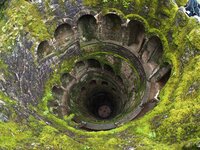
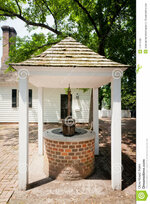
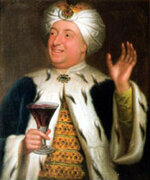
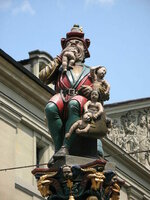
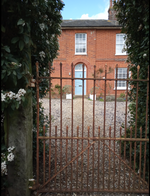
Pink Floyd has some real trippy imagery, very appropriate.


Yeah, the roundel medal pinned to the guy's chest makes him looks like patrician RAF. I guess back in the time The Wall was released, the chap caricatured would have been old enough to be involved in the RAF's alleged jolly japes over England's south coast on 15 August 1952.
I start to think that 400s, 1400s,1600s and 1800s possibly cover the same events. These events are outfitted with different names and uniforms, but they nevertheless are the same events. That is in my developing humble opinion.
SourceTelling the journey of a character called Pink, Scarfe visualised his life as a twisted mix of elegance and horror. At the core of the story was the titular wall; a defensive barrier that Pink constructed to close himself off from a cruel world. Through Water's songs, we get to learn about the death of Pink’s father during World War II, we learn how his mother domineered him, how his school bullied him, the government controlled him and how his wife betrayed him.
Another bump for the thread at: Our timeline could be much shorter than we think.... As of yesterday, KD is developing the theme that:
Wait, what, KD's back?Another bump for the thread at: Our timeline could be much shorter than we think.... As of yesterday, KD is developing the theme that:
Those themes are fundamental to this IHASFEMR thread. So, if this thread is too yucky, you might prefer to examine our situation from KD's higher ground.
- we are the mortal genetically-engineered products of beings, who
- suffered some sort of war or cataclysm, and whose tech
- became our Industrial Revolutions and Great Exhibition exhibits, and
- these facts have been kept secret (from us)
KD adds that we may be enclosed in a protected environment that needs maintenance; for which time may be running short.
Personally, I think there is ample evidence that so-called mythical creatures - from giants to dragons - originally shared this space. And may still do. It's also clear that giant humans, and/or conventionally-sized humans have been - and probably still are - using humans as material resources. So I don't buy - at least not yet - the idea that humans alone created the environment in which we find ourselves.
But the idea that we are in a protected environment is a good fit for the notion that since about the time of Britain's Domesday Book - approx 1,000 years ago - we have been in a highly managed environment.
I assume it was obvious in my first posts about British floods being converted to politico-ecclesiastic events (here and here), that the Queen Mary of British history - and possibly Christianity's Virgin Mary - are crypto references to 'Mer', 'Mar' and 'Mare'. Meaning: the sea. To a catastrophic, environment-changing flood.
If that is correct - and if the 1086 Domesday -> i536/1536/1540 flood -> today chronology is correct - then we are looking at:
I have no idea if we are 'domed' or if the dome needs maintenance. However, I certainly think the situation for most life in our domain needs improving. That includes the situation for most humans, from north to south, east to west.
- an environment-changing event 1,000 years ago
- another environment-changing event 500 years ago and
- the possibility of another environment-changing event in the imminent future (for which 'Climate Change' is a crypto-label).
As this IHASFEMR thread was created to identify and interpret evidence that humans were created for and used in very material ways, I will go on dumping examples from the mountain of evidence that this was so. But I think folks who are disturbed by the IHASFEMR case, as well as those who accept the IHASFEMR case, might want to consider bigger picture possibilities like the one apparently beginning to appear in KD's thread.
At stolenhistory.ORG.Wait, what, KD's back?
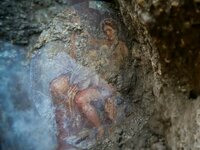
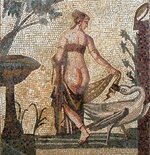
Branding... You have to ask, was branding an early Church weakness? Or did it do exactly what it said on the tin?The infants massacred by King Herod in his attempt to kill the infant Jesus (Matthew 2:16-18) are known as 'Holy Innocents'
andfor reasons which are likely to be very interesting, it was thought best to hand the infant institution over c.1148 to a new monastery...
It is possible that the conversion of the original hospital and the foundation of the two new institutions at Malandry and St Katherine's represent steps in a coordinated effort to make a charitable and religious point at the southern entrance to the city.
he... had a great love and concern for children and the defenceless. He visited leper-houses and washed the ulcerous limbs of their inmates.
andIllness itself was seen as a symbolic manifestation of spiritual malaise; the redemption of the sick (although not necessarily their 'cure') was largely a matter of their living a life within an institution which was a continual symbolic action; and the salvation of the remainder of society depended on their also playing their allotted symbolic role in the exchange, by ensuring that the sick received the appropriate charity. Thus it is that the great hospitals like the Malandry are prominently sited outside the gates of towns.
a symbolic location intended to emphasise the liminality of those whose serious spiritual malaise was being manifested as physical sickness.
Presumably it was also this social liminality which made it seem appropriate that the Master and Brethren here should have been given the responsibility for the burial of criminals executed on the gallows (themselves located physically at the boundary) at [nearby] Canwick.
Ablation? Remember the General Oblation Board?
its function in England was primarily a fund-raising one
In other words, both documentation and building remains suggest the hospital's product offer shifted from water medicated with infant blood to 'room rental'. In 1906, one Sister Elspeth wrote that in1340:The structures of the hospital will also provide an important source of evidence to complement the impression given by the documentary sources that, in the later 13th and 14th centuries, many inmates had purchased their lodgings there, and that the institution had become something like a retirement home for the well-heeled
We can see that the phrase:there were then nine brethren and sisters, of whom only one was a leper, and he had bought his place there for 100 shillings, contrary to the terms of foundation; the seven women in the house had not been admitted by charity, but for payment.
might just as reasonably be written as:the institution had become something like a retirement home for the well-heeled
the institution had become something like a retirement home for thewellhigh-heeled
- 'the royal patronage extended to the house proved much more of a hindrance than a help. For the office of warden was constantly given, probably as a reward for services of a very different kind, to the royal clerks;'
- so mismanaged it that in 1274 John was ordered to put a faithful and discreet man in his stead, unless he himself wished to be credited with the maladministration of his deputy
- new chaplain followed in the next year; but time after time the same complaints were repeated. In 1284 the house had to be placed under the custody of the sheriff; (Ie what we would today call 'administration')
- Separate houses were to be assigned to the chaplains, the brethren, and the sisters. (which implies that earlier there wasn't separation)
- In 1301, however, the house was still 'in decay for want of good rule,' and vacancies had been filled without reference to the chancellor (ie without going through candidate vetting that had been imposed because of its past bad hires)
- In 1327, rents which should have helped to support the house had been allowed to fall into arrears. (ie rent its land to friends and family and let the authorities pick up the subsequent bankruptcy bill. This may explain claims that houses were built on its land)
- In 1334 William de Gerlethorp, appointed to the custody of the house, was accused of burdening it with corrodies (housing for 'ecclesiast staff) beyond its ability
- replaced by Simon of Barlings,... but Simon's own rule was no better
- 1340 'Visitation' (Ie inspection by top brass)
- there were then nine brethren and sisters, of whom only one was a leper, and he had bought his place there for 100 shillings, contrary to the terms of foundation; the seven women in the house had not been admitted by charity, but for payment.
- in 1341 and 1342 there were fresh complaints of men and women admitted contrary to the terms of the foundation.
- 1345 Visitation (Another inspection by top brass, which resulted in requests for cash the next year)
- 1422 report that its assets has been 'wasted'
There were numerous complaints against the hospital regarding matters such as rooms being rented out to others when there were few lepers resident and houses being built on the hospital lands.
The priory kept also stock (meaning: livestock) on the common, as well as using water from the springs there, and there were disputes with the city about stocking levels.
we know from the various disputes which the city had with the monastery throughout the 15th century that the mother house in Lincoln was a major focus for shearing and processing the wool (Hill 1948, 345-8).
Along the river, also, St Katherine's had extensive fisheries, which were also the subject of chronic disputes (see, for example, the long list of complaints raised by the city with the King's commission in 1275.
andThe site appears to have seen a period of relative dormancy during the 15th century, with natural accumulation of soils forming over much of the area. This dormancy appears to last until possibly the early 16th century, when the site was again used as a cemetery.
The human remains included articulated inhumations as well as disarticulated bone and are from both adult and juvenile individuals
He also became a member of the Lincoln Club in the mid-1740s and of the Society for the Encouragement of Arts, Manufactures, and Commerce in 1754. He had connections with thehistory-managingSpalding Society and became vice-president of both the Foundling Hospital and the General Medical Asylum.[1]
The view of what?

That practice is called Holy Communion, the sacrament, or the Eucharist. In English, Eucharist sounds like 'You Christ'. In romance languages it sounds like "I am Christ".
1. Genetic code that develops a built-in 'loyalty loop'. Or - in programming lingo - a fast and frugal 'faith function' that tests incoming data. Put another way, the inability of humans to conceive of being continuously betrayed by 'the authorities' is so strong, it appears to be a type of phobia. Perhaps a phobia of 'cultural dissent' was written into us by rewriting the code that already gave primates' their fear/avoidance of water. Perhaps humans share this loyalty loop with dogs, who also know where their food and treats come from regardless of how their owner treats them.

I'm a bit late to the party and I'm only now catching up on these crazy but fascinating threads - amazing work. (Surprisingly funny too, given the dark subject matter.) I'm just going to post a bunch of random comments/responses to things that struck me.
(I'm responding to posts in the original thread that this was split from: Cannibalism in humans, Great Apes, Prion diseases, and mRNA therapy)
Amazing words combinations it that post.
I would add that 'Eucharist' sounds very much like 'thank you' in Greek. So a different interpretation could be something like:
"I am Christ, eat my body, drink my blood, thank you!"
Which then made me think of this:
View: https://youtu.be/bAF35dekiAY?t=73
"It was decided to cut through the whole tangled problem, by breeding an animal that actually wanted to be eaten and was capable of saying so clearly and distinctly. And here I am!"
If this is anything like the reality that occurred, this could also help explain something about our present, ready acceptance of any authorities (at least by most people, maybes not around here so much). Perhaps wanting to believe that stories or fairy tales were a sort of psychological coping mechanism - a kind of life-raft that we cling to to ignore the reality. So, perversely, the worse the trauma is the more we are accept the story provided by the authority that did it, as it allows us a form of mental escape. And that we have a formed a habit of accepting stories because of traumas.
I'm a bit late to the party and I'm only now catching up on these crazy but fascinating threads - amazing work. (Surprisingly funny too, given the dark subject matter.) I'm just going to post a bunch of random comments/responses to things that struck me.
(I'm responding to posts in the original thread that this was split from: Cannibalism in humans, Great Apes, Prion diseases, and mRNA therapy)
Amazing words combinations it that post.
I would add that 'Eucharist' sounds very much like 'thank you' in Greek. So a different interpretation could be something like:
"I am Christ, eat my body, drink my blood, thank you!"
Which then made me think of this:
View: https://youtu.be/bAF35dekiAY?t=73
"It was decided to cut through the whole tangled problem, by breeding an animal that actually wanted to be eaten and was capable of saying so clearly and distinctly. And here I am!"
If this is anything like the reality that occurred, this could also help explain something about our present, ready acceptance of any authorities (at least by most people, maybes not around here so much). Perhaps wanting to believe that stories or fairy tales were a sort of psychological coping mechanism - a kind of life-raft that we cling to to ignore the reality. So, perversely, the worse the trauma is the more we are accept the story provided by the authority that did it, as it allows us a form of mental escape. And that we have a formed a habit of accepting stories because of traumas.


You might be interested to know that it was during Cromwell's time subduing Ireland, that there was a massive trade to England of Irish skulls to be powdered and for the skull moss. ( Did I already mention this before?)Cromwell => Chroma well => coloured well => medicated well => poisoned well.
Thanks - appreciate the kudos.So many of them were left uninterred outside that they grew said moss.
There was one nobleman in particular in northern Ireland who apparently had lined a road with thousands of the skulls of those he slaughtered.
I'm sorry, I didn't keep the link when I read it and now can't find it.
This thread has got me thinking if the official murder and violent crime stats in Western countries can really be trusted. The official narrative is that murder and violence is Western countries is at all time low rates and that Western countries have basically never been safer in all of human history than they are now.
Yet how can this really be trusted? It seems to me that most people just take the government's word for it because they publish some statistics each year that most people assume to be accurate and truthful. It seems to me that it would be in the interests of the powers that be to create the impression that murder and violence rates are extremely low and an almost insignificant issue, because then most people would not think about and investigate these issues very deeply and therefore the activities of the powers that be would go unscrutinised.
It seems to me that people have no real way of knowing if they live in a safe environment or a dangerous one. All they know is what the government choses to tell them and consequently feel safe if the government tells them it's safe, or feel unsafe if the government tells them it's unsafe.
Gilles de Rais
patron of Joan of arc and notorious child killer/consumer
Discussion - in Russian - of sanitation appearing to be an afterthought in old buildings: Единая планетарная архитектура 200 лет назад (Google English translation)why doesn’t Versailles have toilets?
You might be interested to know that it was during Cromwell's time subduing Ireland, that there was a massive trade to England of Irish skulls to be powdered and for the skull moss. ( Did I already mention this before?)
is essentially consisting of fresh and modified remnants of humus - the characteristic organic constituent of soils
the period after about 1285 when sea-level rise began to flood river basins so as to produce the [Norfolk] Broads (Google maps) and to make problems in Wainfleet Haven (Google Maps) and the East Fen. Whatever was protecting Skegness seems to have been successful until perhaps the fifteenth century
In 1291, when the abbey was at the height of its prosperity, its temporalities (meaning: assets) in Thorney were valued at £46 19s. In 1539-40 the value had fallen to £34 13s. 4d.
The abbey raked in the moolah until 1291; then its Net Asset Value (NAV) began to fallas sea levels roseuntil it was 'surrendered' tothe epic flood we know asthe 1540 Dissolution.

In Switzerland, for example, the first particularly cold winters appear to have begun in the 1550s, with cold springs beginning around 1568: the year 1573 had the first unusually cold summer (Pfister, 1995). The increased variability of the climate may have led to alternations between unusually cold winters and relatively warm summers.
A severe winter preceded the hot summer that precipitated the Great Fire of London in 1666. A harsh winter followed by a warm summer may have added to the discontent of peasants who stormed the Bastille in Paris during the summer of 1789.
East Deeping became a wealthy place and gained guildhalls, a courthouse, market crosses and schools. Margaret Beaufort (mother of Henry VII) was Lady of Deeping and took an active interest in her lands.
In late medieval times, the Manor House, West Deeping – now known as ‘The Granary’ - was owned by Margaret Beaufort, mother of Henry VII. The current building dates from 1643 and comes complete with a moat. (Google Maps), (Google Streetview)
The turning point for the communities came when the Norman Richard De Rulos married into the Wake family of Bourne and took control of the area.
He raised a “high bank (for the river often overflowed), creating a great village”. The fen became “the most fruitful fields and a garden of pleasure”.
I'm not sure actually if it was online or in a book I downloaded. Hard to keep track when I read such a wide variety of subjects and little titbits like that occur in so many things I read on larger subjects.Thanks - appreciate the kudos.
I've looked online for references to the avenue of skulls but not found it. It was easier to find material on the therapeutic uses of skull moss. Eg: https://hekint.org/2019/08/29/cranium-the-symbolic-powers-of-the-skull/
Good for epilepsy and as a styptic. Must check Superdrug.
I got some feedback that my last post was a little dense to read. Apologies for that. It was a tough one to write, what with there being so many tempting leads lying around. I should probably get some sales management software to start keeping my investigation prospects in better order.
It is hard to keep track. It's got easier since I started using Obsidian. Took a while to get my head around it but it has been worth the effort. Especially for drafting posts that collect varied sources and multimedia.I'm not sure actually if it was online or in a book I downloaded. Hard to keep track when I read such a wide variety of subjects and little titbits like that occur in so many things I read on larger subjects.
Exit to add: I've finally caught up again although without following most links you've posted as it is late.
If you're researching floods if you haven't already read it, then reading the book Oera Linda might add to your knowledge.
Also with regard to earthquakes cycling, I've been researching catastrophism lately and I came across a guy who seems to have proved that yes they do and it's in relation to particular planetary alignments.
I'll look tomorrow night and see if I can find you a link.
But in case anyone else is thinking along these lines, I'm wondering about: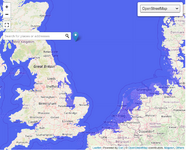
Yes,I was working on a thread for the Oera Linda book when sh.net began, specifically aimed at trying to correlate chronology of world flooding with it's story but it fell to the wayside ( although one day maybe I'll revisit that research which I still have ,uncompleted).It is hard to keep track. It's got easier since I started using Obsidian. Took a while to get my head around it but it has been worth the effort. Especially for drafting posts that collect varied sources and multimedia.
So when YouTube destroys your carefully-crafted penknife gag by hiccuping the video of a sword-wielding Russian woman in a wine-bar embedded in post-10005, Obsidian helps you super-quickly find and upload the copy you made earlier. The full video is at https://www.youtube.com/watch?v=0aqn7Umb-_Yh, but for the swordplay-hesitant, here's a short clip:
Oracle said:
Yes, I would appreciate a link to the planetary alignment => earthquake link if you can find it. I saw it in January but didn't appreciate its significance. And I'll take your advice on the Oera Linda. Skimming it, I'm most interested in the causes of the catastrophes it references. They are the elephants in the room. They've left huge footprints all over eastern England.
SH.org user Llend outlined a possible big picture explanation that seems to fit well:
I don't know if Llend's proposition is correct or not. However, their high-level explanation is a good fit both for the evidence I've posted and for evidence I haven't. I don't know if SH.org's Llend is the same Llend that posts on this board.
- Our Timeline Could Be Much Shorter Than We Think: post 2100
- Our Timeline Could Be Much Shorter Than We Think: post 2112
Similarly, Akanah's reference to the North Sea in their post at SH Archive - A Faustian Bargain? The First Pope may well be relevant if it were unpacked a bit. That is just intuition speaking. A guess.
When I first posted the Market Deeping post above, I thought it was one of my crappiest. Except possibly for the supporting evidence it provided for Tim Cullen's and Simmons' flood dates. Having edited and added to it over the last week I'm hoping it is now much better. Read it carefully and perhaps you can:
I'd like more evidence before I go making outlandish claims.
- Begin to see why this part of England - the fens around ('The Wash' (Google Maps)) - produces so many inconsistencies. AKA 'reveals' or in card players' terms: 'tells'.
- Appreciate that something historically important about this part of England has been hidden.
It strikes me that if you were taking control of a devastated land that was previously seven kingdoms, then a practical approach to staking your claim might be to blend the memories and records of the seven pre-flood kings into one entity with six wives. This to:
- Why Lincolnshire was once the most densely populated county in England - before becoming almost the least densely populated.
- The oddness around the eight king Henries, especially the last one, who had six wives because... no son.
So, from a history fabricator's perspective: rewrite the receding sea - (sea in Romance languages: Mar/Mare => Marie) - as a short-term royal phenomenon called Queen Mary; have her preceded by a single larger-than-life king (Henry VIII); have her succeeded by Queen Elizabeth I, and with that you are ready to sail out and colonise a drowned world complete with a new history. A duct-taped history, but intact and good enough for a new nation to rally around.
- Stuff credibility into a made-up history by rearranging the previous rulers from parallel kingdoms into a line of rulers that ended with no issue.
- Reduce the consistency problems - and legal risks - of the lies being found inconsistent with any surviving records, and
- "reconstruct a new landed aristocracy on the ruins of the old" (see here if you enjoy the detail)
It's a nutty story of course but it:
Visually, the key to understanding it is this:
- Fills in the blanks in the inadequately explained end of England's seven 'Saxon' kingdoms.
- Fits with the strange mix of English vocabularies: eg Doggerel (AKA 'Anglo-Saxon') and French,
- Explains the possessions and interests of the Dukedoms, and
- explains the absurd history - and architecture - of places like Thorney (Google Maps), (Google Streetview). I mean, just read it.
- And much, much else.
View attachment 11853
Europe's North Sea coasts under a four meter sea-level rise
It's based on the second flood map in Paul Budde's North West Europe flood chronology (which Oracle referenced in the Cannibalism thread). The above flood map applies to England the same sea level rise that Budde's flood map shows as having inundated the Belgian and Dutch coasts:
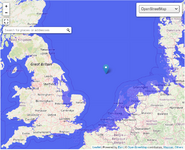
The Durham University Geography team briefly mentioned the possibility of there having been seven or eight meter high floods in eastern England. That would look like this:
View attachment 11854
Europe's North Sea coasts under a seven meter sea-level rise
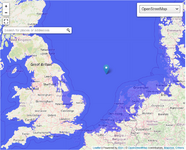
And, IIRC, they mention the possibility of a 12 m flood. That would look like this:
View attachment 11855
Europe's North Sea coasts under a 12 m sea-level rise
On the face of it, any of these floods were pretty bad news for Holland and less bad for England.
Though how bad depends what was in that part of England before 'Queen Mary' sat on the throne.